
Performance and Participation

About 5 years ago, in November 2019, I recorded my 33rd Entry in this bLog book, which centred on the “inclusivity“ of ethical multiple relationships.
At that time, Mrs Angela Merkel (CDU) was still German Chancellor, having formed a so-called “grand coalition“ with the CSU and the SPD; the AfD had entered the Bundestag for the first time with a share of 12.6% of the total vote.
That is why the aforementioned entry also dealt with politics, precisely because at the time it served as an extremely fitting example of the limits of the “willingness towards inclusivity“… But today, five years and a pandemic later, I am tempted to say, “If I had only known what was to come…“ (and I sincerely hope that I will not have to reaffirm this in another five years).
Because I don’t really fancy turning political again, as this blog is supposed to be about (multiple) loving relationships; but our loving relationships don’t exist in a virtual environment, they are part of this world, which means that – as has been mentioned several times before on this blog – the famous quote by feminist theorist Carol Hanisch still applies: „The personal is political and the political is personal“. The connection between personal experiences and political structures simply cannot be dismissed – or, more precisely, that political structures have the power to influence our personal experiences.
The late Scott Peck, the “father of community building (processes)“ had already recognised this in an almost prophetic way in the late 1970s. Especially in his two pioneering books, which later became fundamental literature for numerous small-scale collectives, communes and ecovillages, notably “The Road Less Travelled“ from 1978 and, in particular, “The Different Drum“ from 1987, he impressively phrased the ‘‘question of inclusion“and therefore the very idea of inclusivity, in the following way¹:
“Is there any reason why someone shouldn’t participate?“
This approach to inclusivity was and remains somewhat revolutionary because it reverses the burden of proof, as the non-inclusive form of the question is usually phrased as, “For what reason should someone be allowed to participate?”.
Which brings me to the present day, where it seems to me that inclusivity is in a much worse state than it was five years ago.
As ever, I still read complaints in many forums where polyamorous people discuss why we continue to encounter such strong resistance to our lifestyle and relationship philosophy. On top of that, people often lament how monogamy is still seen as the desirable norm and ideal state of relationship life – to the point that even in long-term romantic relationships, it is considered entirely untouchable.
Then I often sigh inwardly and think that, strictly speaking, it is unfortunately not just a problem of communication or agreement between the ‘relationship inmates’ affected, but that, in order for this view to really change significantly, we would obviously also have to rethink our mental entanglement with our economic practices and our social system in the Western world. Yes, even on a truly personal level.
This is because the general trend is currently leaning increasingly towards “non-inclusivity“. Or, at best, towards “conditional inclusivity“.
And that is, to put it mildly, somewhat bizarre – and, at worst, worrying – because Homo sapiens, in other words: all of us, are genetically and epigenetically (i.e. in terms of our conditioning, which in turn influences our genes) wired for togetherness and community.
Thus, Stefan Fritze, senior physician at the Central Institute for Mental Health in Mannheim, even emphasises this in an article published this year by the German news programme “Tagesschau“ on “World Friendship Day 2025“²: »In prehistoric times, it was almost impossible to survive without close contacts. Short-term loneliness (as stress) therefore seems to be a warning signal from the body that something needs to change.«
However, in order to become part of a community and be allowed to participate in it, a “performance component“ is increasingly being added to the equation, which is intended to provide an answer to the non-integrative form of the question of inclusiveness:
“Why should anyone be allowed to participate?“ “Because he*she*it contributes something!“
And this principle applies to everything – beginning with the citizenship in our state and our economic community and ending within our smallest private units, our (romantic) relationships, especially when these are based on a literal mini social contract like a marriage (in Germany since 2017 also available to same-sex couples).
In the magazine Max Planck Research (issue 2|2025), science journalist Tobias Beuchert (on the occasion of the book presentation of Petra Pinzler’s current political assessment “Hat das Zukunft oder kann das weg?“ [“Does it have a future or can it be discarded?“], campus 2025) issues, that »Every (political) measure has a social component and therefore needs to be supported by people.«
However, such social components also have a repercussion in that we, as “those affected“, will orientate ourselves accordingly along the larger context:
When, as is currently the case in Europe, more and more doors are closing to new arrivals and barriers to the cross-border movement of goods, services and people are increasingly being raised – and at the same time, new arrivals and long-established residents alike are being asked to contribute more and more in order to be allowed to continue participating fully in the greater whole – then this has an impact on our view of the world – and thus also on our private conditions.
Because we experience it in our everyday lives: the “outside world“ sets the tone. The answer to the question of how and why someone should be allowed to join in and participate is increasingly being answered with: “Performance first – then participation!“.
That way, we are gradually subjecting even our romantic relationships to this dictum, whereby ‘love’ or ‘relationships’ must increasingly be thought of in terms of progress, success and gain, a principle that Eve Rickert and Franklin Veaux in their 2014 book on Polyamory, “More Than Two“, referred to as the “social escalator“³ – on which one should always move forward and, above all, upward.
And this is an increasingly critical situation, because Scott Peck’s originally integrative, community-promoting question of why someone should NOT participate is increasingly perceived as unreasonable: ‘‘How so? Just like that?’’
In his aforementioned review, the journalist Tobias Beuchert uses a maritime metaphor in light of this growing reluctance both in society as a whole and among individuals, stating: »Nevertheless, there have been ships that set sail into rough waters with courage, hope, and ideas, and reached their destination. Perhaps it was because on board, things were fair, everyone took responsibility, and felt involved in decisions.«
Accordingly, we currently seem to lack courage, hope and ideas. We do not feel that we are trusted to take individual responsibility, but rather experience that we are often patronised. And we don’t perceive ourselves as being involved as a result – which is a vicious circle, because in order to be involved, we first are expected to contribute something…
In accordance with this pattern, our dating profiles are beginning to resemble “purchase order reports“. The space that other people could occupy in our hearts is gradually becoming more limited – and, in any case, distinctly outlined.
And this also applies to our existing relationships – the question of the respective contribution and overall benefit is increasingly pushing itself loudly to the foreground, becoming the yardstick for the ‘quality’ of the underlying relationship – and a constant source of thoughts regarding comparison and competition.
This is, of course, extremely detrimental to the quality of our external and internal relationships, because by shifting the legitimacy of atachment to the performance level, we lose sight of the actual significance of interpersonal connections for us.
And please don’t get me wrong: I’m not advocating arbitrariness here either. Personally, I don’t believe at all that we can enter into a relationship with just anyone, especially a friendly or even romantic one (otherwise I wouldn’t be Mr. Oligoamory, arguing here at length for “relationships with a select few participants“). What I am actually referring to are the famous “meaningful (personal) relationships“ that I have already written a three-part series about on this blog ( 1 | 2 | 3 ).
I would like to reiterate to the above statement made by Stefan Fritze from the Central Institute for Mental Health in Mannheim. He adds: »It is not the sheer number of relationships that matters, but their depth. At its core, loneliness is based on a lack of meaningful social relationships. Authentic friendships, on the other hand, which are based on trust, reliability and mutual interest, can compensate for this lack and act as an emotional safety net.« In the corresponding interview, he also specifies that the value of these relationships is based specifically on aspects that cannot be quantified according to performance standards: »High-quality friendships are characterised by prosocial behaviour. This includes things such as encouragement, support in difficult times, reliability, emotional closeness and loyalty.«²
So what can we do? Especially in times when the political ‘outside world’ increasingly wants to link participation in such an ominous way with performance, making it increasingly difficult for us to remain sufficiently receptive even in our private lives – and thus to treat our loved ones with an oligoamorous anti-performance attitude of solidarity, equality and appreciation?
Recently, I came across an inspiring text on social media by author and yogini Moksha Devi (Verena Maria Rottmar), which seems to offer an initial answer to how we might find our way back from the current “rugged individualism“, as Scott Peck once called it, towards a “gentler individualism“ – and which I would like to share with you today, at the end of this Entry:
We live in an era of withdrawals.
Not out of calmness – but out of caution.
Not out of clarity, but out of fear of imposing ourselves, being too little, or too close to something that could bring change.
“No“ is on the rise.
Not the gentle, honest, tentative “no“. Not the “no“ that is essential to life and healthy.
But the reflexive “no“. The one that wants nothing more to do with anything.
No conversation. No encounter. No deviation from one’s own course, however narrow it may be.
“That’s not my way.“
“I don’t feel any impulse there.“
“Thanks, but no.“
And that’s okay. Of course it’s okay.
But sometimes – this “no“ is a protective shield against closeness, against the risk of discovering new paths together with someone and allowing yourself to be surprised.
People who dare to build bridges know this feeling:
You offer something, not to change someone, but to invite them.
A shared experience.
A conversation.
An evening full of possibilities.
An experience that promises no certainty.
An opinion that is not set in stone.
And instead, you get a clear, impenetrable, cold “no“, or a passive-aggressive explanation that tries to pull the wool over your eyes.
Not out of malice.
But out of a strange logic: “I’ve got to protect myself.“
And don’t get me wrong… often that is exactly what is needed!
But sometimes we forget that genuine connection doesn’t just happen on its own.
It happens when someone takes a step, even if the ground is still shaking.
When someone says:
“I don’t quite understand. But I’ll go along with it.“
“I don’t want to shut myself off from this, just give me a little more time.“
The world doesn’t become richer when everyone only does what they already know.
It becomes richer when people allow themselves to be surprised by the lives of others.
Not to lose themselves – but to remember more deeply who they could still be.
And sometimes the greatest gift is:
A small, hesitant “yes“.
Whoopee…
And then, boundaries shift – bridges are built.
In small ways.
In human ways.
In the courage not to immediately dismiss everything that doesn’t fit in 100%.
Because sometimes the miracle lies not in the perfect match,
but in the willingness
to be present anyway.
¹ Scott Peck, “The Road less traveled – A New Psychology of Love, Traditional Values and Spiritual Growth“; Arrow Books 1990 and “The Different Drum – Community-making and peace“, Arrow Books 1990
² The complete article (and interview) on World Friendship Day 2025 can be found in the Tagesschau archive HERE (German language only)
³ Eve Rickert and Franklin Veaux: “More Than Two: A Practical Guide to Ethical Polyamory“, Thorntree Press 2014
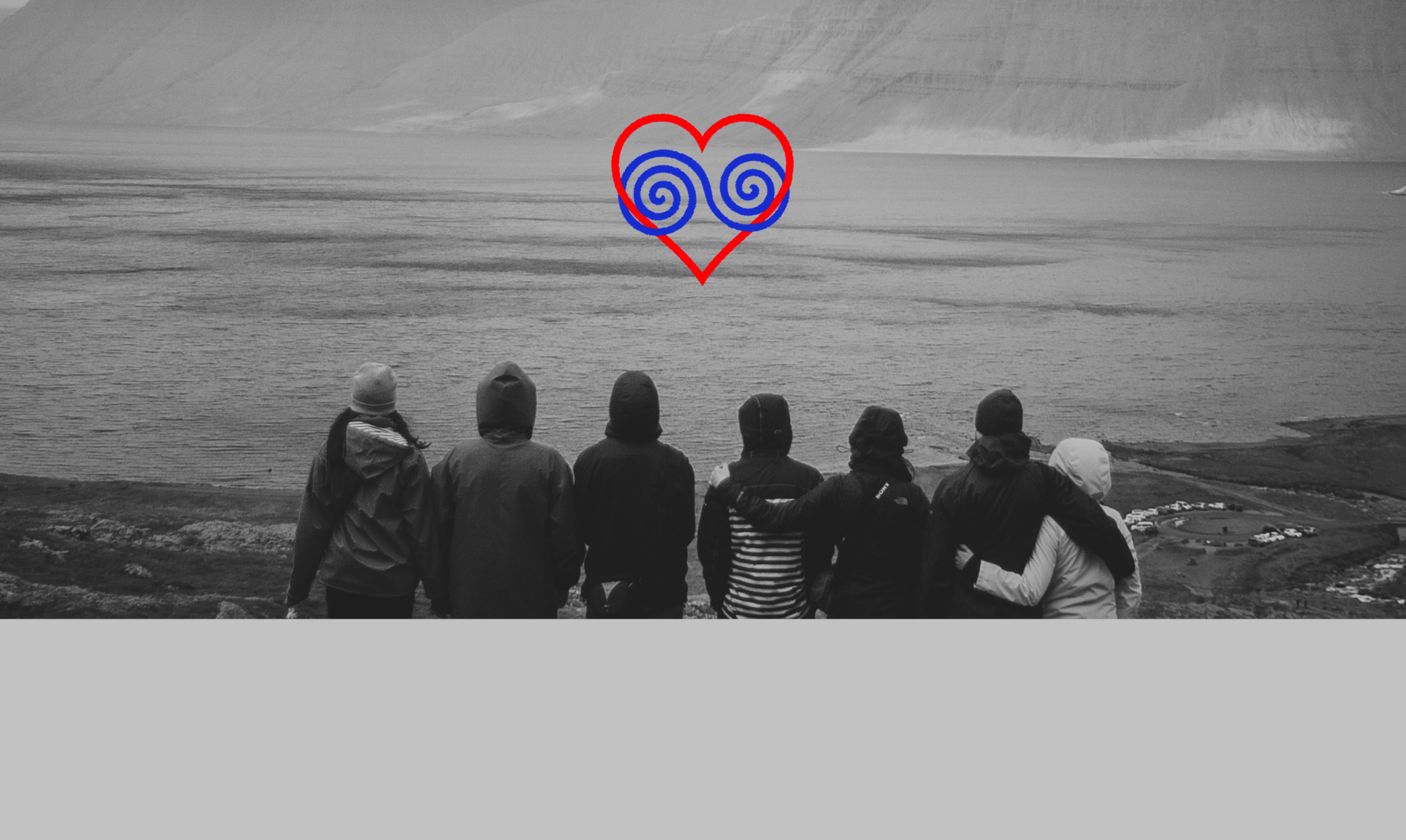
Thanks to Markus Spiske on Unsplash for the photo!
And above all, thanks to Moksha Devi (Verena Maria Rottmar) and her personal permission to use her touching text “We live in an era of withdrawals“ (found on her facebook page).
All rights remain with the author!
Hallo Oligotropos,
Da hast du ein umfassendes Bild gezeichnet – von der Leistungseinforderung in der Gesellschaft zur Leistungseinforderung im Privaten. Natürlich kannte ich das Zitat von Carol Hanisch, habe es aber noch nirgendwo in Verbindung mit Leistungseinforderung angetroffen. Insofern eine interessante Verknüpfung.
Meine Gedanken dazu:
“Warum sollte jemand nicht teilhaben dürfen?” – Weil das Einladen dieser Person dem gesamten System Ressourcen abzieht, ohne neue hinzuzufügen. Ich denke hier an die Einladungspolitik von sexpositiven Partys oder Swingerclubs. Wer sich besitzergreifend und ignorant verhält, wer einfach anfasst anstatt vorher um Konsens zu fragen, fliegt raus – oder wird beim Erkennen der Warnsignale gar nicht erst eingeladen. Nicht-Teilhabe hätte eigentlich die Funktion einer Immunreaktion. Nur sind wir im gesellschaftlichen und polyamoren Diskurs von solch einer sinnvollen Anwendung von Teilhabe weit entfernt.
Daher ein Gedankenanstoß: Was ist, wenn wir Leistung neu denken? Es ist ja immer Leistung an wen und wozu (um was zu bekommen?). Die Leistung am Arbeitsplatz ist zum Beispiel an ein garantiertes Gehalt und Anerkennung am Arbeitsplatz gebunden.
Könnte nicht aus einer Meta-Perspektive “Leistung” im Beziehungsdiskurs mit “Teilhabe” gleichgesetzt werden? Mein “Trotzdem da sein” ist doch eine mentale Leistung. Mein Angebot, etwas Neues miteinander zu probieren, und was ich dafür bereit bin zu tun, ist doch ein Angebot an Leistung. Auch ein garantiertes regelmäßiges Treffen in einer Freundschaft ist eine Leistung – ein Angebot an Zeit und emotionaler Investition.
Ich lasse dir den Gedanken mal so da.
Lg Sacriba
Scott Peck, von dem das Originalzitat “Warum denn NICHT?” ja stammt, ist als Gemeinschaftsmensch – über unsere normal-demokratische Mehrheitsfindung hinaus – vielmehr von einem eher konsentischen Prozess ausgegangen. Ein solcher ist aus meiner Sicht deutlich nuancierter (“Wer stimmt zu [trägt vollinhaltlich mit]?, “Wer hat Bedenken [trägt aber mit]?”, “Wer enthält sich?”, “Wer hat schwere Bedenken [und trägt nicht mit]?”, “Wer steht beiseite?”) als das, was wir in unseren westlichen Staaten bei einer Wahl erleben: Mehrheit setzt durch (eben auch notfalls gegen die Minderheit) – aber dies ist das “Entscheidungsfindungsverhalten”, welches die meisten von uns erlernt haben und auch in ihren Beziehungen häufig anwenden (und hey, ich bin ein großer Freund von Demokratie und demokratischen Abläufen, das möchte ich betonen!)
In Kommunen und Lebensgemeinschaft (die mit Peck als Grundlage arbeiten) wird indessen oft tatsächlich solange an einer Entscheidung gewerkelt, bis allumfassender Konsens hergestellt werden kann – oder lieber auf eine Entscheidung sogar verzichtet, wenn das nicht zu machen ist. Bewundernswert (wenn auch für praktische Alltagsentscheidungen manchmal ungünstig […wie lange man wohl auf eine Waschmaschine verzichten kann, bis alle mit deren ökologischen Kriterien einverstanden sind…]).
Den Gedanken übrigens, daß Teilnahme allein schon durchaus eine Leistung in sich ist, hatte ich beim Schreiben des Textes übrigens tatsächlich auch 🙂 Ich hab’ ihn dann nicht hingeschrieben, weil er einem Teil von mir zu kühn für die Abgründe des Tagesgeschäfts erschien… Aber! Wer als Kind in den 70er und 80er Jahren des 20. Jahrhunderts in Deutschland aufwuchs, hatte die Chance, in dieser etwas aufbruchsfreudigeren Zeit das herrlich anarchische Kinderliedersammelsurium “Die Rübe” (1973) von Fredrik Vahle u. Christiane Knauf zu genießen. Auf dieser befindet sich ein Lied nach Bertold Brecht, welches genau das Spannungsfeld von Teilhabe und Leistung (bzw. beidem…) in humoristischer Weise aufgreift: “Ein Fisch mit Namen Fasch”. Den Text verlinke ich HIER.